Tann v Bhundia, Wijetunge [2022] UKUT 268 (LC)
Amanda Gourlay Service Charges 0
It’s been a while since I posted a review of an Upper Tribunal decision. That said, we’ve not had many service charge appeals in the Upper Tribunal this autumn.
This case is rather an oddity, and I’m not sure that I completely agree with Judge Cooke’s reasoning. She was however dealing with leases that contained some peculiar provisions.
-
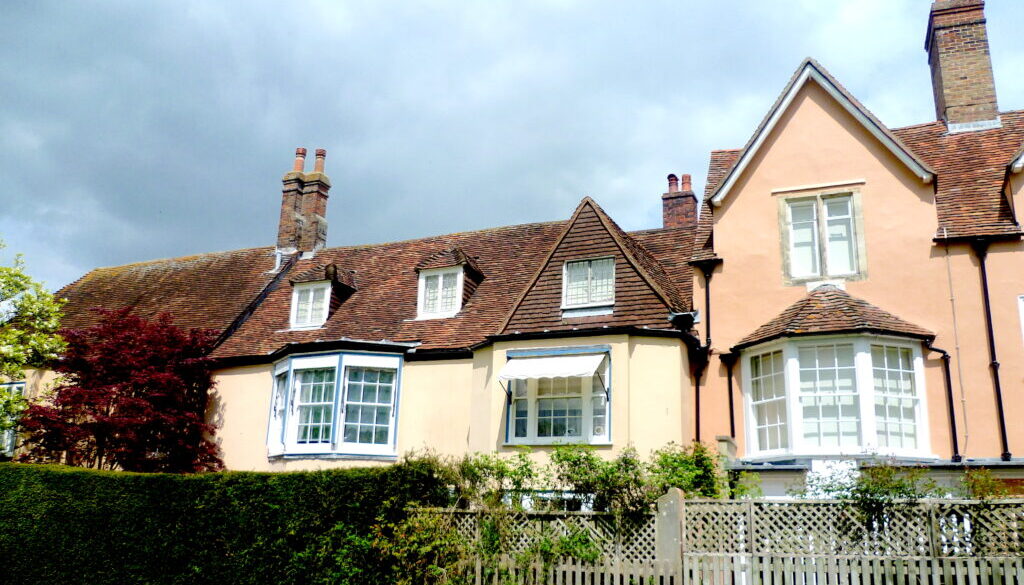
We are looking at a very small arrangement here. 187 Dudden Hill Road contained only two leasehold properties, both of them maisonettes.
Mrs Tann was the leaseholder of No.187 on the ground floor. Ms Wijentunge was the leaseholder of No.187A, the first floor maisonette.
Mrs Tann had extra space at ground floor level because her maisonette extended beyond Ms Wijetunge’s. Ms Wijetunge lawfully used the roof of that extension as a terrace.
It was the condition of the roof/terrace that brought the parties to the tribunal.
The problem was that the Mrs Tan’s roof, which comprised a concrete slab with an asphalt surface above, was cracked and needed repairing.
The landlord freeholders applied to the FTT for an answer to these two questions:
- Whether they were obliged to carry out the repairs;
- Whether, if they incurred the costs of repairing the concrete slab, they could recover the cost of those repairs from the leaseholders through the service charge.
The freeholders’ case was that the lease did not oblige them to carry out the works.
Mrs Tann argued that the freeholders were so obliged.
She was willing to contribute towards the cost of those works.
-
The lease of the first floor flat, 187A, was granted on 06 June 1980.
The lease of the downstairs flat, 187, was granted on 23 September 1980.
The wording of the leases was subtly different. For present purposes, the key clauses related to:
- The scope of the property demised to the leaseholders;
- The leaseholders’ obligation to pay a service charge, and
- The landlords’ repairing obligations.
-
The FTT decided that:
- The concrete slab was demised to both maisonettes;
- The landlord’s repairing applications extended only to those parts of the building that were “used or capable of being used by the lessee and the lessor”;
- The leaseholders were only liable to contribute towards the landlord’s costs of maintaining and repair those parts of the building that were “used or capable of being used by the lessee and the lessor”;
- “While the repairing obligation covered party walls and party structures, the landlords neither use nor are capable of using the concrete slab between 187 and 187A and are not liable for its repair under either of the ”
- So far as the maintenance and repair of party structures was concerned, the leaseholders were each liable to contribute 50% to the costs.
-
The hearing in the FTT took place by video, as is often the case nowadays.
In her first ground of appeal, Mrs Tann alleged that there had been procedural unfairness.
She lost the video connection shortly after the hearing began, and, despite her best efforts, was not able to reconnect for about half an hour, although she said it felt much longer than that at the time.
She said that she rang the Tribunal eight times and emailed them to let them know that she had lost the connection, but was unable to reach anyone.
The FTT said however that as soon as it realised that Mrs Tann had lost her connection, it halted the hearing and waited for her to rejoin.
Mrs Tann was nonetheless concerned that proceedings had continued in her absence, all the more so because she said that she had not properly understood the landlords’ barrister’s opening arguments.
Unfortunately however, when she rejoined, she did not ask for those opening arguments to be repeated in a different way.
Elizabeth Cooke’s view was that the FTT did everything that it could to help Mrs Tann, who did not inform it that she had not understood the landlord’s opening arguments, and who could not say what else she would have wanted the Tribunal to do.
Evaluating this ground of appeal, Judge Cooke said:
“Losing connection during a video hearing is very stressful, and I understand completely that to be shut out of the hearing for so long was upsetting Mrs Tann. The FTT’s comments about Mrs Tann’s attempts to contact the tribunal while she was disconnected were unhelpful, and ignored the obvious fact that where a party is trying frantically but unsuccessfully to make contact the tribunal would necessarily be unaware of the efforts being made. But so far as the hearing itself was concerned the FTT followed the proper course in halting the hearing, waiting for her to re-connect, re-starting the hearing and asking counsel for the freeholders to repeat his opening. I find that there was no unfairness in the FTT’s procedure. The appeal fails on this ground.”
-
So the parties moved on to the main issue: who, if anyone, was liable to repair the concrete slab and either pay or contribute towards the costs of doing so.
It was common ground that the upper surface of Mrs Tann’s roof, a.k.a. Ms Wijetunge’s terrace, belonged to the flat on the first floor, that is to Ms Wijetunge.
-
“Service charge provisions,” said Elizabeth Cooke, “can generally not be understood without first knowing the extent of the demised premises and the obligations of the parties to the lease, so I start with the demise premises, look at the repairing obligations, and then analyse the central question about service charges.”
She reminded herself that the lease of the first floor flat was granted before the lease of the ground floor flat, and that the leases would be construed in the light of the ordinary meaning of the words used, and in light of the “facts known to the parties when the document was executed” (Arnold v Britton [2015] UKSC 36).
Neither Mrs Tann’s nor Ms Wijetunge’s lease expressly referred to the concrete slab between the ground floor and first floor flats. Indeed, neither lease referred to the structure of the building – horizontal or vertical – at all.
That did not however leave the parties without a solution. In Sturge v Hackett [1962] 1 WLR 1257, Lord Diplock said:
“It is … settled law that, in the absence of provisions to the contrary in the lease, a demise of part of the building divided horizontally or vertically includes the external walls enclosing the part so demised.”
Elizabeth Cooke concluded that the leases divided the building horizontally, with the result that the external walls of the ground floor maisonette were included in Mrs Tann’s demise. Similarly, the external walls of the first floor maisonette were included in Ms Wijetunge’s demise.
She was supported in that conclusion by the ground floor leaseholder’s obligations to grant entry to the landlord. That obligation arose in just two situations:
- First, where the landlord needed access in order to repair “adjoining premises”. Those premises were, in her judgment, Ms Wijetunge’s maisonette upstairs;
- Secondly, where the landlord required access for the alteration and rebuilding of the demised premises, as opposed to for repairs or maintenance.
Having determined that the concrete slab and the rest of the horizontal structure between the properties were demised to one or both the lessees, the next stage was to decide to whom it was demised.
Here, Judge Cooke turned – as many of us would – to Dowding and Reynolds on Dilapidations, the practitioner’s textbook on liability to repair.
She said:
“There are obvious problems with a horizontal division of the structure between two flats or maisonettes so that two lessees have to repair half of it each and no one person can be required to repair the whole structure. At paragraph 7-17 of Dowding and Reynolds on Dilapidations the learned authors comment that “This seems an unlikely intention to attribute to the parties in the ordinary case”. It is unlikely that the parties to the lease of 187A intended the demise to include half of the horizontal structure below the maisonette and half the concrete slab, in the absence of express words to that effect, and I find that that is not what the lease did.
“Moreover, the most usual arrangement for flats is that the demise extends from the underneath of the flat’s own floor (excluding the horizontal structure below) to the underneath of the floor of the flat above (including the horizontal structure above). In Dowding and Reynolds on Dilapidations at paragraph 7.16-17 there is reference to Greystone Property Investments Limited v Margulies (1984) 47 P & CR 472, where Griffiths LJ observed that the general expectation of anyone taking a lease of a flat is that he acquires “the space between the floor of his flat and the underneath of the floor of the flat above”. The parties to the original lease of 187A, granted in June 1980, might well have intended that the demise would include the horizontal structure above his ceiling (whether or not it also included the roof) and will have had in mind that the forthcoming lease of 187 downstairs would include the space and structure between the two storeys.
“And in that case the parties to the lease of 187, knowing the terms of the demise of the upstairs maisonette, will have intended that the demise would include the space and the horizontal structure above the ceiling – both the joists inside the main building and the concrete slab above the extension – as far as the underside of the floor of 187A above.
“I find that that was the intention of the parties to both leases.”
-
Leaseholders
Ms Wijetunge, the leaseholder of the upstairs maisonette, was obliged to keep that maisonette in repair:
- “in particular the roof of the Maisonette” and
- “all party and other walls and fences sewers drains pathways passages easements and appurtenances thereof”.
Mrs Tann, the leaseholder of the downstairs maisonette, was obliged to keep that maisonette in repair:
- “in particular the foundations” and
- “all party and other walls and fences sewers drains pathways passages easements and appurtenances thereof”.
Each leaseholder was also permitted to enter the other’s demise in order to maintain and repair theirs.
Landlord
The landlord was obliged to repair:
- “all ways passageways pathways sewers drains watercourses water pipes cisterns gutters roofs party walls party structures fences easements and appurtenances belonging to or used or capable of being used by the Lessor with the Lessees and the tenants or occupiers of the premises near to the demised premises or of which the demised premises form part”.
-
Given the covenants, the landlord was only obliged to repair property that either “belonged to” it, or was used or able to be used with the leaseholders.
Very little of the building actually “belonged to” the landlord.
The concrete slab did not “belong to” the landlord, nor could the landlord use it. Therefore it was not obliged to repair it.
It was strange that the landlord had very little by way of repairing obligation for the ground floor maisonette – Judge Cooke noted only two areas that were not demised: the garden paths and fences – but that was the correct interpretation of the lease.
Further:
“If the horizontal structure between the maisonettes and the concrete slab were split medially between the lessees as the FTT said, then each lessee would be required to repair their own half; obviously neither can repair half the concrete slab or half a joist without co-operation from the other and that arrangement would be very problematic; … that was not the parties’ intention.”
Equally, if the obligation to repair the concrete slab had rested solely on the first floor maisonette, that leaseholder would have borne a “disproportionately heavy practical burden”, because they would have had to keep in repair the concrete slab and the roof.
In Judge Cooke’s view, that analysis lent weight to the conclusion that the original parties to the lease intended that the ground floor flat be responsible for repairs to the horizontal structure between the ground and first floor maisonettes, including the concrete slab that formed the roof of the ground floor and the terrace of the first floor.
Mrs Tann was therefore responsible for repairing the concrete slab.
That news, said Judge Cooke, “may be unwelcome to her, but it does give her control over the process”.
-
“The usual arrangement whereby a service charge is payable by reference to the cost of the lessor fulfilling its obligations is absent [in Mrs Tann’s and Ms Wiljetunge’s leases],” observed Judge Cooke.
In fact, the works and services towards which the leaseholders were required to contribute were not even works and services provided necessarily by the landlord. They were simply listed as the costs of repairing and maintaining a list of items, including, in the case of the upstairs maisonette:
“all … party walls party structures fences easements and appurtenances belonging to or used or capable of being used by the Lessee in common with the Lessor or the tenants of (sic) occupiers of the premises near to or adjoining the Demised Premises or of which the Demised Premises form part”.
The ground floor maisonette was required to contribute towards the same list, although the items had to be “belonging to or used or capable of being used by the Lessees in common with the Lessor and lessee of the upper maisonette or the tenants or occupiers of the premises near to or adjoining the demised premises or of which the demised premises form part”.
Those contributions were unusual, not least because:
- they included an obligation to contribute to the cost of repairs to the foundations, should the landlord carry out any such repairs – even though that was an obligation borne by the ground floor maisonette, and
- they obliged the landlord to contribute to the cost of certain works carried out by the upstairs and the downstairs leaseholders, albeit provided that the landlord was able to use the item on which works were carried out.
-
Both leaseholders were required to contribute towards the cost of repairs and maintenance to “party structures”.
Judge Cooke held that the concrete slab was demised to Mrs Tann in the ground floor maisonette, but she nonetheless considered that it was a party structure for the purposes of contributions towards the cost of works to it.
She cited Lord Justice Woolf in Twyman v Charrington [1994] 1 EGLR 243, who said:
“Structure which are immediately adjoining the demised premises shall be regarded as party structure, and those parts which are used for their common benefit which are not immediately contiguous should be regarded as mutual, and I would so regard the roof.”
Given that the concrete slab was a party structure, Judge Cooke concluded that “the cost of repairs to the concrete slab can be shared through the service charge”.
So far as the obligation of the first floor maisonette was concerned, there was no need for the landlord to be able to use the item in common with the leaseholders – the operative word was “or”, not “and”.
-
The leases included provision for each leaseholder to require the landlord to enforce the other’s covenants, so long as that leaseholder indemnified the landlord for their costs of doing so.
“I take the view,” said Elizabeth Cooke, “that … the lease of 187A upstairs enables the lessor to require the upstairs lessee to contribute to the cost of repairing the slab, and enables Mrs Tann [the ground floor leaseholder] to require the lessor to enforce that covenant. The contribution would obviously have to be passed on to her as she would have incurred the cost of the repair. As to the amount of the contribution I see reason to depart from the FTT’s conclusion that each lessee must pay half the cost of the repair, and no-one has suggested that I should.”
Yikes.
-
The appeal was allowed. Judge Cooke set aside the FTT’s decision, and replaced it with the following:
- the landlords were not required to repair the concrete slab. Even if the leaseholders gave them access and agreed to the landlords carrying out repairs, the costs would be irrecoverable from the leaseholders;
- the concrete slab was demised to the ground floor maisonette;
- the leaseholder of the first floor maisonette was obliged to contribute towards the cost of repairs. The ground floor maisonette leaseholder was entitled to require the landlord to enforce the covenant to contribute. Whilst the obligation to contribute was a covenant made with the landlord, “obviously the payment must be passed on to the lessee of 187”.
From a practical perspective:
- Mrs Tann was in control of repairs to the concrete slab;
- Ms Wijetunge was required to give her access to have the work carried out;
- Ms Wijetunge was obliged to contribute towards the cost of the works, but that obligation must be enforced by the landlords.