Isaac Sadeh, Deborah Kol, Caroline Ebborn v Mirhan and Azzniv (Charitable Trust), Mary-Ann Bowring [2015] UKUT 0428 (LC)
The intangibles can be the most hotly disputed areas of service charge. This appeal relates to two such items of charge: management fees and insurance, including commercial activity weighting and commissions.
-
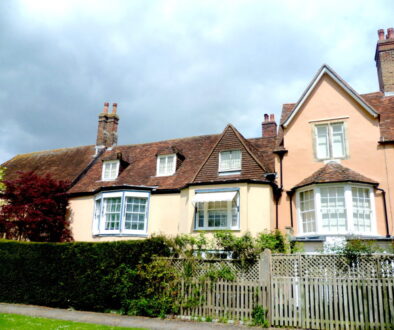
66 Rosslyn Hill in London NW3 is a building comprising four storeys:
- On the ground floor there is a dry cleaning business, occupying one third of the floor area of the building;
- The upper floors, covering the remaining two thirds of the floor area, contain three separate flats, each occupying one storey, each flat being held on a long lease by each of the appellant lessees.
The dry cleaning business paid one third of the service charge: the remaining two thirds were divided between the lessees.
-
In this appeal, the Tribunal worked from the lease of the first floor flat, which was for a 99 year term from 25 December 1981, and required the lessee to pay a service charge.
The service charge year was calendar.
In terms of insurance, the lessees were required to pay:
“by way of further rent a fair proportion of the yearly sum or sums expended by the Lessor in insuring the Building … against loss or damage by fire explosion flood storm tempest lightning civil commotion impact aircraft in peacetime and any articles dropped therefrom and other risks normally covered by a comprehensive policy and against such other risks as the Lessor shall reasonably think necessary (hereinafter called “the Insured Risks”) in the full reinstatement value thereof …”In exchange, the landlord promised:
“To keep the Building … insured against loss or damage by the Insured Risks in the full reinstatement value …”
The landlord also covenanted, in a form of sweeping up clause, that:
“Without prejudice to the foregoing [it would] do or cause to be done all such works installations acts matters and things as in the absolute discretion of the Lessor may be necessary or advisable for the proper maintenance safety and administration or the Building.”
-
The parties were not strangers to litigation.
On 04 August 2011, the LVT issued decisions on two applications.
First, it determined the amount of service charge payable for the years 2004 to 2011.
It limited the amount recoverable in respect of insurance to the cost of the premium in 2011. This was because no commission was paid that year, and the premium was substantially lower than between 2004 and 2010. It also reduced the amount claimed by way of management fees.
Second, it appointed a manager, under section 24 of the Landlord and Tenant Act 1987, for a two year period until 03 August 2013.
The manager was Ms Bowring of Ringley Chartered Surveyors. Ms Bowring was not the lessee’s choice – she was proposed by the landlord. Her annual management fee was £1,750 plus VAT.
-
It appears that the lessees’ dissatisfaction with their service charges continued after Ms Bowring’s appointment because they subsequently applied to the FTT for a section 27A determination for 2012 and 2013.
Amongst other items, they challenged:
- The quality of the management provided by Ms Bowring for her annual management fee of £1,750 plus VAT;
- The insurances; and
- The amount charged as part of the management fee by Ms Bowring in respect of the preparation of a document for the purposes of section 20 consultation.
The FTT issued its decision on 26 July 2013. It is that decision which is the subject of this appeal to the Upper Tribunal.
-
The FTT determined that the manager’s annual fee of £1,750 plus VAT was reasonable and payable. For the purposes of the appeal, it is important to know what the FTT actually said in its decision:
“81. The management fee was set by the Tribunal in its order of 4 August 2011 at £1750 plus VAT (£2100 total). This is the figure that the tenants were being asked to pay.
“82. The tenants made serious allegations about the conduct of the manager. The reliability of these allegations could not be fully tested not least because the tenants did not appear at the hearing and so could not be cross examined by Mr Tang.
“83. Although the manager may not have been as person-centred as the tenants may have liked, it was important that the tenants should understand that the manager, having been appointed by the Tribunal under section 24 of the Landlord and Tenant Act 1987, was answerable solely to the Tribunal and was not answerable to the tenants.
“84. Looking at the all of the documentary evidence it was clear that the manager had acted in good faith throughout. The tenants had failed to establish any grounds upon which the management fee could be reduced.”
“That”, said HHJ Huskinson in the Upper Tribunal, “is the totality of the F-tT’s reasoning in relation to the issues raised by the appellants in relation to the activities of Ms Bowring as manger and receiver and as to their arguments that less than £1,750 plus VAT should be paid as remuneration through the service charge”.
Insurance
Three points fell for consideration by the FTT:
- Property owner’s liability cover;
- Commercial risk loading, and
- Commission.
The FTT found against the lessees on all three points.
Section 20 notice
The FTT dismissed the lessees’ challenge to Ms Bowring’s £300 fee for preparing section 20 notices.
-
The lessees were granted permission to appeal on four grounds:
- Whether the costs of preparing a notice for the purposes of section 20 of the 1985 Act as amended could properly be charged on top of the management fee, and
- Whether the full amount of the management fee was properly chargeable as part of the service charge;
- Whether the insurance which was placed by Ms Bowring in respect of the building for 2012 and 2013 involved the payment for risks which were not envisaged by the lease (and which could not properly be charged for through the service charge);
- Whether the amount of the service costs should be credited with the amount of a commission obtained by Ms Bowring in respect of one aspect of the insurance for 2013.
-
Ms Bowring, whose tenure as manager had expired in accordance with the LVT’s order in August 2013, played no part in the appeal.
The Mirhan and Azzniv (Charitable Trust) did not participate either: it had sold the freehold in December 2013.
The only active parties to the appeal therefore were the lessee appellants.
-
HHJ Huskinson began by allowing the lessees’ appeal against the inclusion of the charge for preparing the section 20 consultation documents.
The terms of the management order whereby Ms Bowring was appointed made provision for her remuneration.
The services and duties that she was to perform in consideration for that remuneration were set out in paragraph 2.5 of the Service Charge Residential Management Code in what HHJ Huskinson described as “a long list of duties which included preparing statutory notices and dealing with consultations where qualifying works etc were proposed”.
In other words, preparation of the notices was included in Ms Bowring’s annual fee and should not be charged as a supplementary item.
-
The tenants relied on the LVT decision of Ralphs v Peachey BIR/39//UF/LSC/2009/18. As a decision of the LVT, it was not binding on either the LVT, FTT or Upper Tribunal.
It was however “instructive”, observed by HHJ Huskinson, because it addressed two of the insurance challenges made by the lessees here:
- Property owners’ liability. and
- Apportioning commercial weighting of insurance premiums in a mixed commercial and residential building.
Property owners’ liability
In this context, I understand property owners’ liability insurance to mean insurance in respect of a property owners’ personal liability to third parties.
Construing the lease
HHJ Huskinson began by distinguishing the wording of the insuring clause in Ralphs from the insurance clauses in the lease before him.
In Ralphs:
- The obligation was to insure against risks of damage to the property, not against personal liability to third parties;
- Further, the landlord had noted only his own interest in the third party liability section of the policy. He had omitted to include the lessees.
HHJ Huskinson approached the interpretation of the lease in this appeal by construing the landlord’s obligation to insure together with the requirement that the lessees pay for that insurance.
He concluded that those two provisions required the landlord to insure the building against damage from various risks. There was no requirement however to insure against third party liability.
That said, the sweeping up clause was:
“…widely drafted and enables the landlord to do other acts matters and things as in its absolute discretion may be necessary or advisable for the proper maintenance safety and administration of the building … A decision to extend the insurance cover on the building so as to include property owners liability in my view falls within this paragraph”.
Matters of fact
There was however a hitch in the evidence:
- The FTT – and the LVT in 2011 – appeared to have considered that the lessees’ interest in this respect was noted on the policy, but
- The lessees believed that their interest was not noted, and there were grounds for concluding that they were right.
Unable to determine the issue, HHJ Huskinson made the following decision:
“The part of the insurance premium which is properly attributable to property owners’ liability was reasonably incurred and would form part of the costs, upon which the service charge should be calculated, provided that the property owners liability extended to cover the appellants.
“If it did not do so then in my view that part of the premium was not reasonably incurred and should not be included as part of the service costs. This matter will have to be decided by the F-tT pursuant to the remission which it is necessary for me to make”.
More on the remission below.
Commercial weighting
The apportionment of the service charge between commercial and residential elements of the building was agreed, based on floor areas, as to one third and two thirds respectively.
Liability to pay insurance
The amount of the insurance premium payable by each lessee was set out in two places in the lease:
- In the reservation of the additional rent: the lessees were obliged to pay a “fair proportion” of the insurance premium, and
- In schedule 2 to the lease, which provided that each lessee was to pay one third of the total expenditure incurred “in relation to the entire upper residential part” of the building and the reserved parts.
The insurance premium was weighted however, to take account of the commercial – at the time, dry-cleaning – use of the ground floor unit.
As matters stood, the landlord made no adjustment in the apportionment of the premium so as to load the commercial use weighting onto the commercial unit alone.
The residential lessees argued that all of the commercial weighting element of the insurance policy should be borne by the commercial lessee.
Ralphs, fish and chips
HHJ Huskinson turned again to Ralphs, where:
- The building in question contained a commercial unit – a fish and chip shop, and
- The LVT approved the landlord’s method for arriving at the insurance element of the service charge by having regard to the higher risk posed by the fish and chip shop and also to the internal floor areas of the respective units.
In that case, the landlord used two insurance costs to calculation the proportion of the premium which represented the increased premium caused by the presence of the fish and chip shop:
- The first was the cost of insurance on the basis that the fish and chip shop was occupied as normal risk commercial premises, such as a gift shop, and
- The second was the premium actually payable with the fish and chip shop.
The third way
As a matter of principle, HHJ Huskinson did not accept that the commercial unit should bear the whole cost of any insurance weighting imposed by reason of its existence:
“The building is a mixed use building”, he observed. “It may well be that insurance on a similar building would be cheaper if the building was entirely in residential use.
“However I do not accept that the tenants of flats in a mixed use building are entitled to demand that they only pay an insurance premium calculated as if the building was something that it is not, namely as if it was a 100% residential building rather than a mixed use building…
“The [tenants] have flats in a mixed use building. They cannot complain that the insurance premium to which they are required to contribute is an insurance premium appropriate to a mixed use building”.
That was not to say however that the lessees should bear a proportion of the commercial weighting, irrespective of whether the commercial operation was high or low risk.
So saying, HHJ Huskinson drove his horses along the third way applied by the landlord in Ralphs.
He reminded himself that:
- The lease obliged the lessees to pay a “fair proportion” of the insurance premium, and
- The commercial and residential units bore a one third/two third share of the costs, based on their floor areas.
In the light of those provisions and the reality on the ground, he concluded that the lessees should pay two thirds of the premium which would be payable if the ground floor unit at the building was a normal risk commercial occupier.
He gave a worked example. If the premium:
- Would be £x p.a. if there was a normal risk ground floor commercial occupier, but
- Was £(x+y) for the actual occupier, then
- £y should be removed from the premium and
- Only £x should be attributed as to two thirds to the appellants for charging through the service charge.
It followed therefore that he allowed the lessees’ appeal on the commercial weighting ground too. He remitted the issue to the FTT for a determination of the amount properly payable by the lessees because there was insufficient evidence before him to determine that amount.
Separate terrorism cover
This point only arose in connection with 2013. Ms Bowring, the manager, had taken out a separate policy to cover acts of terrorism.
The excess on that policy was £5,000, a figure that, on the papers, was significantly higher than in previous years.
The lessees did not however argue that the cost of the insurance was too high.
Instead they ran the argument that in procuring insurance that was underpinned by a £5,000 excess, Ms Bowring had not insured the building to its full reinstatement value.
This was an argument that the FTT did not address, but HHJ Huskinson did – although he ultimately dismissed it.
He accepted that, if the excess on the insurance premium had been “unreasonably large”, for example, £100,000, that the lessees could legitimately argue that either:
- The building was not insured to its full reinstatement value, or
- The cost of the insurance was not properly incurred within the meaning of section 19 of the 1985 Act.
“There is”, he said, “a difference between:
-
- “Performing an act within the terms of the lease, but performing it in an arguably inadequate way, and
- “Performing an act which is outside what is contemplated by the lease at all”.
Failure to insure to full reinstatement value
On this point, HHJ Huskinson had the following to say:
“If there had been an incident which had given rise to a claim under the terrorism policy and if the appellants had been prejudiced by the fact that there was this £5,000 excess, then it may be they would have had some claim against the landlord for having failed to comply with the covenant in the lease to insure the building in the full reinstatement value. Happily that did not occur”.
Was the cost reasonably incurred?
HHJ Huskinson considered that the £5,000 excess was not “unreasonably large”, and it could not be said that the insurance cost was not reasonably incurred.
“I am … unable to accept the argument that the taking out of this policy involved an act that was outside the terms of the lease, such that in taking it out Ms Bowring was performing an act which fell outside acts for which she could charge through the service charge…”
Commission
HHJ Huskinson dealt with the retention of £184.90 commission in straightforward terms.
“I am conscious”, he said, “of the fact that there is no representation or written submissions from Ms Bowring or the first respondent and no legal representation on the part of the appellants”.
The point was however of potential importance, and, bearing in mind the absence of representation or submissions from Ms Bowring or the freeholders, and the absence of legal representation on the lessees’ side, he observed that this was not the case in which to seek to lay down any general principles concerning commission.
He continued:
“I am aware of the discussion in Service Charges and Management, Third Edition, Tanfield Chambers at paragraph 6-005 on the topic of commissions or discounts which starts with the text:
““This is a thorny subject and an area ripe for dispute in the residential sector.””
How then did he resolve this prickly question?
First of all, by overturning the FTT’s decision that the onus was on the lessees to prove that Ms Bowring was liable to account for the commission.
He held that the onus lay instead on Ms Bowring to show that the total cost of insurance, including commission, was a cost reasonably incurred for insuring the building.
That total cost was not £1,029.98, which was the insurance premium net of commission, but £1,214.88, which was the premium plus commission (£1,029.88 + £184.90).
Had Ms Bowring taken on any obligations in consideration for the payment of the commission? There was no evidence before the FTT to that effect, and no other evidence that justified her retention of the commission.
HHJ Huskinson accordingly concluded that the FTT had made a mistake in determining that the commission formed part of the insurance premium payable by the lessees by way of service charge.
-
This was the final issue.
HHJ Huskinson was clear that the management fee was an item properly chargeable to the service charge. The question for the FTT was whether the management had been provided to a reasonable standard.
HHJ Huskinson began his consideration of the issue by reminding himself that Ms Bowring was an officer of the Tribunal, having been appointed by it as manager and receiver of the building.
The lessees were severely critical of Ms Bowring’s management, and set out their criticisms in writing and documents made available to the FTT. Even so, the FTT had not given proper and adequate reasons. Its decision did not deal with the substantial points which had been raised, nor did it make clear to the lessees why their lessees’ arguments had been rejected.
“Where tenants make serious criticisms to the FTT about the conduct of a manager appointed by the FTT”, said HHJ Huskinson, “then the tenants can expect the FTT to examine these allegations with care. The manager is an officer of the FTT. The criticisms are being made against the manager as officer of the FTT”.
The FTT’s decision could therefore not stand, and the matter had to be remitted to the FTT for proper consideration and a reasoned decision.
-
Drawing all of the above together, HHJ Huskinson summarised his decision:
(1) Section 20 costs: the challenge to the £300 charge for preparing the section 20 consultation notice was allowed;
(2) Insurance commission: the appeal was allowed. No commission was chargeable to the service charge account;
(3) Management charges: the appeal was allowed and the matter remitted to the FTT;
(4) Insurance: property owners’ liability and commercial weighting: the appeal was allowed and the issue was remitted to the FTT to be decided on the principles set out in HHJ Huskinson’s decision.
-
Too much air
Thinking about the failure to insure to the full reinstatement value by imposing a substantial excess on the insurance premium, I was put in mind of a witticism doing the rounds when I lived in France:
A holidaymaker is unable to fit his car and caravan onto the motorail car transporter train because the caravan is too tall.
“Let some air out of the tyres”, suggests the motorail guard.
“That won’t be any good”, snorts the holidaymaker. “The caravan’s too tall at the top, not the bottom”…
A context sensitive excess
On a more serious note, I anticipate that assessing whether an excess is “unreasonably large” will be a question of fact, degree and Tribunal approach. That is rather less appealing. I can see that some dusting down of the crystal ball will be called for.
Commercial heavyweights
This is not the first case on insurance weighting. In Barney, Morell v Eastern Green Ltd [2013] UKUT 0331 (LC), the landlord exercised a power available to it under the lease to vary the amount of insurance payable by the lessees to take account of a deep fat fryer used by a commercial lessee in the course of its café/fish shop/takeaway.
This is however the first case I have come across that suggests a solution to the unfairness of lessees bearing the increased cost of insurance premiums simply because the commercial unit downstairs has changed from gift shop to fish and chip bar.
I rather like HHJ Huskinson’s solution to insurance premium apportionment for high risk commercial units in mixed use developments, but I have some concerns about his reasoning. I set them out below.
My understanding of planning law is that a commercial property may be used for one of the purposes set out in the Town & Country Planning (Use Classes) Order 1987/764.
Class A1 encompasses premises used:
(a) for the retail sale of goods other than hot food,
(b) as a post office,
(c) for the sale of tickets or as a travel agency,
(d) for the sale of sandwiches or other cold food for consumption off the premises,
(e) for hairdressing,
(f) for the direction of funerals,
(g) for the display of goods for sale,
(h) for the hiring out of domestic or personal goods or articles,
(i) for the washing or cleaning of clothes or fabrics on the premises,
(j) for the reception of goods to be washed, cleaned or repaired,
(k) as an internet café where the primary purpose of the premises is to provide facilities for enabling members of the public to access the internet.
Class A3 allows premises to be used for the sale of food and drink for consumption on the premises.
Class A5 comprises fish and chip bars and other outlets dispensing hot sustenance to take away.
I keep these classes in mind, and reach back to one of general principles of the interpretation of leases: a contract is interpreted against the relevant background at the date of its execution.
It seems to me that, if, at the date of grant of the lease or on its assignment, the lessee knew that the commercial premises were authorised for use as a fish and chip bar, it cannot be said that a commercial weighting to the insurance premium was not a matter known – or knowable – before the lease is taken on.
In that event it is difficult to justify a reduction in the weighting to be borne by the lessee.
Conversely however, if, at the date of grant of the lease, the commercial premises were a gift shop which was subsequently authorised for use as a fish and chip bar, HHJ Huskinson’s analysis stacks up perfectly for me.
In summary, my concern is that the parties to a lease are not, as a matter of general contract law, in a position to litigate about the terms of their bargain if those terms were known or could be known before the bargain was struck.
It is only if there is a change in the context of that bargain, after it has been concluded, that it can be argued that the Tribunal is in a position intervene, relying on its powers to determine the reasonableness of the amount charged under section 19 of the 1985 Act.
Commission
By deciding that payment of commission was not a payment towards insurance cover, and was therefore not recoverable under the lease, HHJ Huskinson came up with rather a neat and simple way of dealing with the commission issue.
Echoing that spirit of neatness and simplicity, I sign off here, and will save my thoughts on the recoverability of commissions for the case which tackles point in detail.
Click here for a printer-friendly version of this post.
Click here to read the judgment in full on the Upper Tribunal website.