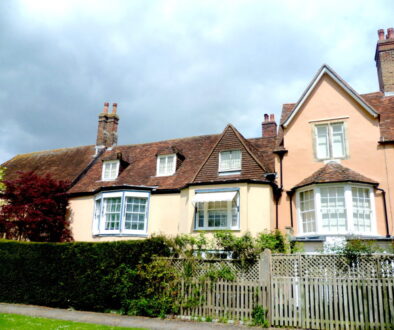
Daejan Properties Ltd -v- Sean Gerald Griffin Alphonsa Mathew [2014] UKUT 0206 (LC)
The FTT panel before which I appeared recently called this decision simply “Crown Terrace”.
It is a long, fact- and submission-dense decision, and I have been quite ruthless in my pruning of it, so as to focus on the relevant legal principles.
To my knowledge it is also the first Upper Tribunal decision to address historic neglect since Continental Property Ventures Inc v White [2006] 1 EGLR 85.
Whereas Continental Property Ventures deals with questions of jurisdiction and set off, in this decision, Martin Rodger QC and PD McCrea FRICS dip their toes into different waters: they consider the quantification of the amount – if any – by which a service charge demand should be reduced by reason of a landlord’s neglect.
-
Ownership dates are important here:
- Daejan became the freehold owner of Crown Terrace in 1973.
- Flat 11 was demised to Mr & Mrs Jain in October 1983.
- Ms Mathew became the registered owner of flat 3 in March 2004.
- Mr Griffin was granted a lease of flat 12 in November 2007.
-
Crown Terrace comprises a parade of nine shops at ground floor level, and eighteen flats in the two storeys above.
The flats sit back a little from the shop fronts, and are accessed at first floor level by an outdoor walkway. The walkway is edged by a parapet wall.
The Upper Tribunal was particularly concerned with the three rows of steel beams supporting the walkway from underneath:
- One row ran the length of the building, and was positioned on the rear edge of the walkway;
- A second row did the same along the front edge, and
- The third sat beside the second, and supported the parapet wall.
The beams were installed when Crown Terrace was built towards the end of Queen Victoria’s life. Despite the abundance of civil engineering talent of that era, their installation did not meet modern standards:
- The beams were probably not protected against corrosion;
- They were inadequate in size, and
- Their supporting padstones were too small.
Unfortunately, their condition could not be inspected without opening up the surrounding brickwork.
Some time between 1985 and 2000, the beam above one shop was replaced.
One of the front rows of beams above another shop was replaced at some stage before 1990.
Even that relatively recent work was not to a standard acceptable to the 21st century engineer.
In 2008 the parapet wall above two further shops cracked and rotated outwards. The parapet threatened to tip into Cricklewood Lane.
Props were immediately put in place.
Daejan discovered that the steel beams supporting that part of the walkway had failed.
-
Emergency repairs were carried out.
Daejan investigated the condition of the remaining beams, and discovered that they also needed replacing.
It decided to divide the replacement works into phases:
- Phases 1 & 2 dealt with the damaged beams which had failed and threatened to tip the parapet onto Cricklewood Lane;
- In phase 3 the condition of the remaining beams was investigated. It transpired that the remaining pairs of front beams all needed replacing;
- The phase 4 works made the walkway safe for use. A temporary railing was provided when the parapet wall was removed;
- Phase 5 comprised the installation of the new steel beams, the casting of a new parapet wall and other finishing off works.
The cost of the whole package of works was a little north of £300,000. The aim was to have them completed over the two years following the discovery of the failed beams.
Before Phase 5 began, the lessees applied to the LVT under section 27A of the 1985 Act for a determination of their liability to pay the costs by way of service charge.
Daejan suspended the work pending the outcome of the proceedings.
-
The LVT decided that:
- Some of the beams had needed replacing in 1960;
- One beam had been replaced 20-30 years before;
- All of the beams should have been replaced at that time;
- If the beams had been replaced at that time, the cost of the work would have been lower than it was now.
- It reduced the amount payable by the lessees by about 13%.
The landlord appealed.
-
The parties had reached a consensus on nine issues by the time the case reached Martin Rodger QC and P D McCrea FRICS in the Upper Tribunal. Key of these were the following:
- There had been no evidence before the LVT to support its finding that the beams needed replacing in 1960;
- The leases required Daejan to keep the steel beams in repair;
- There had been no reason for Daejan to suspect that the beams needed replacing until the beam above shops 10 and 12 failed in August 2008;
- Even though Daejan did not know that the beams were failing, it was in breach of its covenant to keep the beams in repair by the time each lessee acquired his/her lease;
- Phases 1-5 of the works were necessary. All of the beams needed to be replaced;
- In principle Daejan was entitled to recover the cost of repairs from the lessees under the terms of their leases;
- It would make little to no difference to the scope of the works if they were carried out in phases or all at once;
- Phases 1-4 had been carried out to a reasonable standard, and
- The engineers’ fees incurred in phase 2 were reasonable.
-
The lessees argued that the amount demanded by the landlord should be reduced because:
- The works would have been cheaper if they had been tendered and contracted as a single programme, even if the scope of the work had been the same, and
- The works would not have cost as much if they had been carried out earlier as planned maintenance work, as opposed to reactive emergency work.
The costs which had been occasioned by Daejan’s breach of covenant were therefore to be set off against the amounts demanded by way of service charge.
-
The appeal was by way of a re-hearing. It was agreed that its outcome would bind a further eleven lessees and former lessees of Crown Terrace, all of whom had been parties to the LVT proceedings.
Daejan called four witnesses and an expert.
The lessees called two witnesses and an expert. Both experts were chartered surveyors.
The Upper Tribunal reviewed their evidence in detail. It then turned to the law and its application to the evidence.
-
Date of damages
First up, the date when damages can be claimed. The lessees had no entitlement to damages for any disrepair:
- Before Daejan became the freeholder of Crown Terrace, or
- Before they acquired their interest in Crown Terrace.
This, explained Martin Rodger QC, was because the assignee of a lease granted before 01 January 1996 cannot bring a claim for a breach of covenant which occurred before the assignment, by virtue of Lewes v Ridge (1601) cro. Eliz. 863, Martin v Williams (1857) 1 H&N 817.
Section 23(1) of the Landlord and Tenant (Covenants) Act 1995 has the same effect for leases granted after 01 January 1996.
Continental Property Ventures Inc v White [2006] 1 EGLR 85
The Tribunal then reviewed what is really the only well-known case on historic neglect, saying:
“An allegation of historic neglect does not touch on the question posed by s.19(1)(a), Landlord and Tenant Act 1985, namely, whether the costs of remedial work have been reasonably incurred and so are capable of forming part of the relevant costs to be included in a service charge. The question of what the cost of repair is does not depend on whether the repairs ought to have been allowed to accrue. The reasonableness of incurring the cost of remedial work cannot depend on how the need for a remedy arose”.
Historic neglect: making it work
How then does historic neglect feed into a lessee’s liability to pay service charges?
This is the Upper Tribunal’s all-but-hidden pearl of wisdom, tucked away at paragraph 89 of the decision:
“The only route by which an allegation of historic neglect may provide a defence to a claim for service charges is if it can be shown that, but for a failure by the landlord to make good a defect at the time required by its covenant, part of the cost eventually incurred in remedying that defect, or the whole of the cost of remedying consequential defects, would have been avoided.
“In those circumstances the tenant to whom the repairing obligation was owed has a claim in damages for breach of covenant, and that claim may be set off against the same tenant’s liability to contribute through the service charge to the cost of the remedial work.
“The damages which the tenant could claim, and the corresponding set off available in such a case, is comprised of two elements:
- First, the amount by which the cost of remedial work has increased as a result of the landlord’s failure to carry out the work at the earliest time it was obliged to do so; and,
- Secondly, any sum which the tenant is entitled to receive in general damages for inconvenience or discomfort if the demised premises themselves were affected by the landlord’s breach of covenant”.
Knowledge of the disrepair
The parties agreed that Daejan had been in breach of its repairing covenant ever since it had become the freeholder of Crown Terrace in 1973 because the steel beams were already in a state of disrepair by then.
The parties also agreed that there was no need for Daejan to know of the disrepair in order to be liable to the lessees for breach of covenant.
Martin Rodger QC observed that “where part of a building is not demised, but remains within the possession of a landlord which has covenanted to keep it in repair, the risk of undetected deterioration falls on the landlord whether or not it has, or could have, knowledge of the condition of that part (see British Telecommunications plc v Sun Life Assurance Society plc [1996] Ch 69).
-
The primary question for the Upper Tribunal was whether the beam replacement works would have been cheaper if they had been carried out earlier.
Each lessee’s liability required separate assessment, depending on the date on which their leases were granted or assigned to them.
Earlier intervention
Neither expert was able to give the date on which the beams required replacement with any degree of certainty, nor could they state when the repairs would have moved from being plain maintenance to an emergency.
One considered that an inspection of the beams at any stage in the previous 30 years would have disclosed the need for immediate replacement. The other agreed that that was possible but was unwilling/unable to commit himself further.
The Tribunal concluded that Daejan would have been obliged to replace, rather than repair, the beams, had it inspected them at any time on or after 1983, which was the date when Mr & Mrs Jain became lessees of their flat.
The scope of the works would therefore have been identical to the scope of the works carried out between 2008 and 2010.
In a rather sweeping statement, the Tribunal continued:
“We therefore find that substantially the same work would have been required at any time in the 30 years preceding the commencement of the works in 2008. Accordingly, we consider that no real savings would have been made had the beams been inspected and work carried out at any relevant earlier time”.
One phase or five?
The Tribunal was content to accept that the first four phases of the work were required as a matter of urgency: Daejan had no time to consult the lessees or to prepare a detailed tender for the contract.
That state of affairs would have been the same, whether the beam failure had been discovered in 2008 or 1978.
The lessee’s expert had argued for a 12.5% saving if the works had been carried out as one phase, rather than five. The Tribunal however preferred the evidence from the landlord’s expert that significant savings were unlikely. That position was supported by the fact that Phases 1 and 4 had had to be carried out as an emergency. There had been no time to bundle up the works into one package, let alone consult on them all before implementing them.
-
In the Upper Tribunal’s view, there was no reason to award the lessees damages for the disruption caused by Daejan carrying out the repair works: they were works which it was obliged to carry out under the terms of the leases.
It was however the case that the works had been prolonged by the appeal: the lessees had been living without a proper parapet wall since it had been removed in 2010. The Tribunal observed that other lessees had “no doubt found it impossible to sell their flats due to the continuing uncertainty over the extent of their liability”.
However: “neither the Tribunal nor the LVT heard evidence concerning the effect of the prolongation of the works on the comfort and enjoyment of occupation of the flats, or on the ability of leaseholders to let or sell their premises. In those circumstances we do not consider it would be appropriate to make a nominal award in favour of all leaseholders, since to do so might deprive some of more substantial claims”.
-
The appeal was allowed.
-
I would have liked the Tribunal to have given a worked example of the first element of the set off. It did not, probably because it did not have the material to work with.
Evidential poverty is in my experience the single most common reason for lessees’ failing to make out and attach a value to allegations of historic neglect.
Historic neglect and breach of covenant
An allegation of historic neglect is, at its simplest, an allegation of breach of covenant.
In raising the issue, the lessee is saying: “You, landlord, promised in the lease to keep the building in repair. You have not done that. You have caused physical damage to my property, and distress and inconvenience to me. I am therefore entitled to damages”.
In the context of service charges, where the lessee has covenanted to pay for works required to keep a building in repair, the lessee has two further strings to his/her bow:
1) More extensive works are required because the disrepair has worsened since the need for it first arose, and
2) The works are in any event now more expensive than they would have been, had they been carried out eight years ago, in the same way that a loaf of bread is more expensive today than it was eight years ago.
Increased cost of the works
A landlord’s standard response to an allegation of historic neglect tends to be that the works would have cost the same – or been more expensive – had they been carried out earlier. This is particularly the case for cyclical works such as redecoration, because there would have been further cycles of work carried out since the date when the landlord was in breach of its repairing covenant. Therefore, sayeth the landlord, the lessee has saved, not lost, money.
As I read its decision here, the Upper Tribunal does not agree with that analysis. The lessee, in raising historic neglect, is alleging that the works in question would have cost less money had they been carried out, for example, eight years ago as opposed to now. The lessee is not interested in works which may have followed: s/he is interested only in the cost of the works and the effect of inflation on that cost.
That calculation requires the input of a quantity surveyor or an economist.
To my mind, the question of whether the works would have cost less had they been carried out eight years ago also requires consideration of the scope of the works eight years ago. Would it have been the same? Would that rotten window frame have needed replacing, or just patching? It is highly likely that an expert – either a surveyor or a structural engineer, depending on the work – will be needed on that question too.
Damages for distress and inconvenience
Damages for distress and inconvenience are not normally awarded in cases of breach of contract. A breach of a repairing covenant is one of the exceptions which prove the rule.
Therefore, where a landlord neglects a property, and that neglect causes water to leak into a flat, in principle a lessee is entitled to claim damages not only for items damaged by the leakage, but also for the distress and inconvenience s/he experiences.
The unusual feature of this case is that the lessees did not know of the disrepair before it affected them. There could therefore be no claim from them for damages for distress and inconvenience suffered before the remedial work began.
Martin Rodger QC plainly envisaged however that there may be a claim for damages connected with the amount of time taken by Daejan to complete the works. The landlord is entitled to a reasonable period of time within which to effect repairs: whether the repairs exceed that time frame is a question of fact and degree in each case.
In this case, Daejan decided not to proceed to Phase 5 until its appeal had been heard. That I find slightly odd, since it meant that it suspended the works – and left the lessees with an incomplete parapet wall – for what appears to have been the best part of three years, even though both sides agreed that Daejan was liable to carry out the works.
The eight year wait
Eight years has been a long time to wait for a case on historic neglect to reach the Upper Tribunal. For my part I think that the wait was worth it.
Click here for a printer-friendly version of this post